The 99 Names of Allah (Asma ul Husna) represent divine attributes, showcasing Allah’s majesty, mercy, and power, readily available as PDF downloads․
These names, sourced from the Quran and Hadith, offer a profound understanding of Allah’s infinite qualities, with meanings often detailed in accessible PDF guides․
Exploring these names, like Ar-Rahman and Ar-Rahim, through PDF resources, fosters a deeper spiritual connection and appreciation for the Divine, offering both knowledge and blessings․
What are the Asma ul Husna?
The Asma ul Husna, meaning “The Most Beautiful Names,” are the 99 distinct names and attributes of Allah (God) in Islam․ These names aren’t merely labels; they embody the infinite qualities and perfections of the Divine․ PDF resources dedicated to the Asma ul Husna meticulously list each name, alongside its Arabic transliteration and detailed meanings in various languages, including English․
Each name reveals a specific aspect of Allah’s nature – His mercy (Ar-Rahman, Ar-Rahim), sovereignty (Al-Malik), holiness (Al-Quddus), and peace (As-Salam)․ Many downloadable PDF guides offer explanations, helping believers comprehend the depth of each attribute․ Studying these names, often facilitated by PDF study materials, is considered a vital practice for deepening one’s faith and understanding of the Creator․
These names are directly derived from the Quran and the Sunnah (teachings and practices of Prophet Muhammad), making their study a cornerstone of Islamic theology․
Significance in Islam

The 99 Names of Allah (Asma ul Husna) hold immense significance in Islam, representing a direct pathway to understanding and connecting with the Divine․ Studying these names, often through readily available PDF resources detailing their meanings, is considered a highly virtuous act․ PDF guides emphasize that knowing and reflecting upon these names cultivates a deeper awareness of Allah’s attributes and strengthens one’s faith․
Reciting the Asma ul Husna is believed to bring numerous blessings and protection․ Many Muslims utilize PDF formatted lists for daily remembrance (dhikr)․ The names are also frequently incorporated into dua (supplication), enhancing the sincerity and effectiveness of prayers․
Understanding the meanings within these names, as presented in PDF materials, fosters a profound spiritual growth and a closer relationship with Allah;
The 99 Names of Allah (Asma ul Husna) are firmly rooted in the primary sources of Islamic guidance: the Quran and the Hadith․ The Quran itself alludes to these names, highlighting Allah’s attributes․ Numerous PDF documents compile these names, referencing specific verses where these qualities are mentioned or implied․
The Hadith, the documented sayings and actions of Prophet Muhammad (peace be upon him), further elaborates on the significance and application of these names․ Many PDF resources dedicated to the Asma ul Husna include Hadith narrations explaining the meanings and benefits of reciting them․
These PDF compilations serve as valuable tools for studying the divine attributes as revealed through both the Quranic text and the prophetic tradition․
Understanding the Divine Attributes
Divine attributes, revealed as the 99 Names of Allah, showcase His perfection; PDF guides detail these meanings, aiding comprehension of His infinite qualities․
Categorizing these names—Majesty vs․ Beauty—enhances understanding, readily accessible through comprehensive PDF study materials․
The Concept of Divine Names and Attributes
The 99 Names of Allah (Asma ul Husna) aren’t merely labels, but windows into the Divine Essence, each name embodying a unique attribute of God․ Understanding this concept is crucial for deepening one’s faith and connection with Allah․
These names, meticulously detailed in the Quran and Hadith, reveal Allah’s infinite qualities – His mercy, power, wisdom, and justice․ Numerous PDF resources are available, offering translations and explanations of each name’s profound meaning․
Studying these names isn’t simply an academic exercise; it’s a spiritual journey․ PDF guides often include reflections and supplications (Dua) associated with each name, encouraging believers to internalize these attributes and embody them in their lives․ The names demonstrate Allah’s complete and utter perfection․
Categorization of the Names
The 99 Names of Allah (Asma ul Husna) can be broadly categorized to enhance understanding of their diverse facets․ A common distinction is between names reflecting Allah’s Majesty (Jalal) and those reflecting His Beauty (Jamal)․
Names like Al-Malik (The Sovereign Lord) and Al-Quddus (The Most Holy) emphasize His power and transcendence, while Ar-Rahman (The Most Gracious) and As-Salam (The Source of Peace) highlight His compassion and benevolence․ Many PDF resources utilize this categorization․
These PDF guides often provide detailed explanations of each name’s meaning within its respective category, aiding in a more nuanced comprehension of Allah’s attributes․ This structured approach facilitates memorization and deeper spiritual reflection․
Names Reflecting Majesty (Jalal)
Names of Allah reflecting Majesty (Jalal) emphasize His power, sovereignty, and awe-inspiring nature․ These attributes showcase Allah’s transcendence and absolute control over creation․ Examples include Al-Malik (The Sovereign Lord), Al-Qahhar (The Subduer), and Al-Azim (The Great)․
PDF resources dedicated to the 99 Names often detail how these names inspire reverence and humility in believers․ Understanding their meanings reveals Allah’s uncompromising justice and ultimate authority․
Many PDF guides provide contextual explanations, linking these names to specific verses in the Quran and Hadith, deepening comprehension․ Studying these names fosters a profound awareness of Allah’s grandeur and strengthens faith․
Names Reflecting Beauty (Jamal)
Names of Allah embodying Beauty (Jamal) highlight His perfection, grace, and loving-kindness․ These attributes reveal Allah’s approachable and benevolent nature, inspiring love and devotion․ Key examples include Ar-Rahman (The Most Gracious), Ar-Rahim (The Most Merciful), and As-Salam (The Source of Peace)․
PDF resources exploring the 99 Names often emphasize how these names demonstrate Allah’s compassion and generosity․ Understanding their meanings fosters a sense of hope and tranquility in believers․
Numerous PDF guides offer detailed explanations, connecting these names to real-world manifestations of Allah’s beauty․ Studying these names cultivates a deeper appreciation for His blessings and strengthens the spiritual heart․
Exploring Specific Names and Their Meanings
PDF guides detail the 99 Names, like Ar-Rahman and Al-Quddus, revealing profound meanings rooted in the Quran and Hadith for deeper understanding․
Ar-Rahman (The Most Gracious)
Ar-Rahman, meaning “The Most Gracious,” embodies Allah’s all-encompassing mercy and benevolence extended to all creation․ PDF resources dedicated to the 99 Names of Allah consistently highlight this attribute as foundational to understanding the Divine nature․
This name signifies a boundless, unconditional grace, a constant outpouring of kindness that permeates the universe․ Many PDF downloads explain that Ar-Rahman’s mercy isn’t limited by faith or deeds, but embraces everything He has created․
Studying Ar-Rahman through these materials encourages reflection on Allah’s constant provision and blessings, fostering gratitude and a deeper connection with the Divine․ The meanings are often explored with verses from the Quran, readily available in these PDF guides․
Ar-Rahim (The Most Merciful)
Ar-Rahim, “The Most Merciful,” signifies Allah’s specific mercy shown to believers – those who have faith and strive to please Him․ PDF documents detailing the 99 Names of Allah often contrast Ar-Rahman and Ar-Rahim, clarifying their distinct yet complementary aspects․
While Ar-Rahman’s mercy is universal, Ar-Rahim’s is directed towards those who turn to Him․ These PDF resources emphasize that this mercy isn’t merely forgiveness, but also guidance, strength, and blessings in this life and the hereafter․
Exploring the meanings of Ar-Rahim through readily available PDF guides encourages seeking Allah’s favor through righteous actions and sincere repentance, deepening one’s spiritual journey․
Al-Malik (The Sovereign Lord)
Al-Malik, meaning “The Sovereign Lord,” denotes Allah’s absolute ownership and dominion over all creation․ PDF resources dedicated to the 99 Names of Allah highlight that this isn’t simply rulership, but a perfect, unchallenged authority․ His kingdom encompasses everything, and nothing occurs without His knowledge and will․
These PDF guides often explain that understanding Al-Malik fosters humility and submission, recognizing that all power ultimately resides with Allah․ It’s a reminder to rely on Him and seek guidance in all matters․
Studying the meanings of Al-Malik through accessible PDF materials encourages reflection on Allah’s justice, wisdom, and unwavering control, strengthening faith and trust in His divine plan․
Al-Quddus (The Most Holy)
Al-Quddus, translated as “The Most Holy,” signifies Allah’s absolute purity and freedom from any imperfection․ PDF documents detailing the 99 Names of Allah emphasize that this holiness transcends human comprehension, representing a divine attribute unmatched in creation․
These readily available PDF resources explain that recognizing Al-Quddus inspires believers to strive for purity in thought, word, and deed, mirroring the divine attribute․ It’s a call to cleanse the heart and soul․
Exploring the meanings of Al-Quddus through PDF study materials fosters a deeper appreciation for Allah’s transcendence and encourages seeking forgiveness and spiritual refinement․
As-Salam (The Source of Peace)
As-Salam, meaning “The Source of Peace,” embodies Allah’s perfection and freedom from any deficiency․ PDF guides on the 99 Names of Allah highlight that this peace extends beyond the absence of conflict, representing a state of complete harmony and well-being․
These accessible PDF resources explain that recognizing As-Salam invites believers to seek inner peace through remembrance of Allah and submission to His will․ It’s a divine attribute offering solace and tranquility․
Studying the meanings of As-Salam via PDF materials encourages cultivating peaceful relationships and contributing to harmony in the world, reflecting Allah’s attribute in daily life․

Benefits of Learning and Reciting the 99 Names
Learning and reciting the 99 Names of Allah, often aided by PDF guides, fosters spiritual growth, seeks blessings, and deepens connection with the Divine․
Spiritual Growth and Connection with Allah
Delving into the 99 Names of Allah (Asma ul Husna), often facilitated through readily available PDF resources detailing their meanings, is a powerful pathway to profound spiritual growth․
Understanding each name unveils a unique facet of Allah’s character, fostering a more intimate and personal connection with the Divine․ These names aren’t merely labels; they are windows into the infinite attributes of the Creator․
Consistent study, aided by PDF guides, and mindful recitation cultivate a heightened awareness of Allah’s presence in all aspects of life, strengthening faith and inspiring a deeper sense of reverence․ The PDF format allows for convenient and focused learning, promoting consistent engagement with these sacred names․
Ultimately, this journey of discovery nurtures a stronger, more meaningful relationship with Allah, enriching one’s spiritual life and guiding towards a path of righteousness․
Seeking Blessings and Protection
Reciting and reflecting upon the 99 Names of Allah (Asma ul Husna), with a clear understanding of their meanings – often found in accessible PDF guides – is believed to invoke immense blessings and divine protection․
Each name embodies a specific attribute of Allah, and invoking these attributes through remembrance (dhikr) is a powerful act of worship․ PDF resources provide the linguistic and contextual understanding needed for authentic invocation․
For example, reciting ‘As-Salam’ (The Source of Peace) seeks peace and security, while ‘Ar-Rahman’ (The Most Gracious) invites compassion and mercy․ These PDF materials often include specific supplications (duas) incorporating the names․
This practice shields against adversity, fosters well-being, and strengthens one’s reliance on Allah’s boundless grace, offering solace and hope in all circumstances․
Memorization and Reflection
Memorizing the 99 Names of Allah (Asma ul Husna), alongside understanding their profound meanings – conveniently available in PDF formats – is a highly encouraged practice in Islam, fostering a deeper connection with the Divine․
Numerous PDF resources, including guided journals, are designed to aid memorization through repetition and contextual learning․ This isn’t merely rote learning; it’s about internalizing the attributes each name represents․
Reflection on these names allows believers to contemplate Allah’s perfection and manifest these qualities in their own lives․ PDF study materials often include reflective prompts and exercises․
Consistent memorization and thoughtful reflection cultivate spiritual growth, enhance gratitude, and inspire righteous conduct, bringing one closer to Allah’s favor and guidance․
Resources for Studying the Asma ul Husna
PDF downloads, online websites, and guided journals offer comprehensive access to the 99 Names of Allah and their meanings, aiding study․
Islamic Info Center and Towards Faith provide valuable PDF resources, while the Internet Archive hosts translated texts for deeper exploration․
Availability of PDF Downloads
Numerous PDF resources are readily available online for those seeking to study the 99 Names of Allah (Asma ul Husna)․ Platforms like Islamic Info Center specifically offer downloadable PDF documents detailing each name, its transliteration, and comprehensive meanings in English․
Furthermore, websites dedicated to Islamic spirituality often host PDF versions of books and guides focused on understanding these divine attributes․ The Internet Archive provides access to digitized texts, including translations with explanations․
Towards Faith also provides a guided journal available as a PDF, combining memorization tracking, audio-visual learning, and reflective journaling․ These PDF resources cater to various learning styles, making the study of Asma ul Husna accessible to a wider audience, fostering a deeper connection with Allah’s attributes․
Online Resources and Websites
Several websites provide extensive information regarding the 99 Names of Allah (Asma ul Husna), often complementing PDF downloads․ Islamic Info Center serves as a central hub, offering detailed explanations and transliterations of each name․
Various platforms dedicated to Islamic learning and spirituality host articles and lessons exploring the significance and meanings behind these divine attributes․ These resources frequently include audio recitations and visual aids to enhance understanding․

Furthermore, websites like Towards Faith offer interactive resources, including guided journals and audio-visual materials, accessible online․ These digital platforms provide a convenient and engaging way to learn about and reflect upon the beauty and wisdom embodied in Allah’s names․
Guided Journals and Study Materials
For a more structured approach to learning the 99 Names of Allah, guided journals are invaluable tools, often designed to accompany PDF resources․ These journals, like the one offered by Towards Faith, combine memorization trackers with insightful explanations of each name’s meaning․
They encourage reflective journaling, prompting users to contemplate how each attribute manifests in their lives and in the world around them․ Study materials frequently include audio pronunciations and visual representations, aiding in memorization and comprehension․
These resources bridge the gap between theoretical knowledge and practical application, fostering a deeper spiritual connection with Allah through consistent study and contemplation of His beautiful names․
The Importance of Dua (Supplication) with the Names
Dua incorporating the 99 Names of Allah, like “Allahumma inni aduka bi asmaika al-husna kulliha,” enhances supplication, drawing upon divine attributes․
Utilizing these names, understood through PDF resources detailing their meanings, strengthens faith and invites blessings․
Using the Names in Prayer
Employing the 99 Names of Allah (Asma ul Husna) within Salah (formal prayer) and personal supplications, or Dua, significantly elevates the spiritual experience․ Understanding the meanings of these names, often found in readily available PDF guides, allows for a more conscious and heartfelt connection with the Divine․
Reciting specific names relevant to one’s needs – for instance, invoking Al-Shafi (The Healer) during illness – demonstrates a profound understanding of Allah’s attributes․ Many PDF resources offer suggested phrases and Duas incorporating these names, facilitating their integration into daily worship․
Furthermore, reflecting on the attributes represented by each name while in prayer deepens one’s faith and fosters a stronger relationship with Allah (SWT)․ This practice, supported by accessible PDF materials, transforms prayer from a ritual into a meaningful dialogue with the Creator․
Specific Duas Incorporating Asma ul Husna
Numerous Duas (supplications) beautifully integrate the 99 Names of Allah (Asma ul Husna), enhancing their potency and deepening spiritual connection․ Many PDF resources compile these invocations, offering guidance for specific needs and circumstances․ For example, reciting “Ya Allahumma inni aduka bi asmaika al-husna kulliha” – “O Allah, I invoke You by all Your beautiful names” – is a comprehensive plea for Divine assistance․
Specific names can be incorporated based on the desired outcome; invoking Ar-Rahman and Ar-Rahim for mercy, or Al-Quddus for purification․ These Duas, often detailed in PDF guides, are not merely recitations but expressions of profound reverence․
Understanding the meanings behind each name amplifies the sincerity and effectiveness of the supplication, fostering a closer relationship with Allah (SWT)․
Cultural Significance and Practices
Asma ul Husna inspire beautiful calligraphy and art, while recitation is central to Islamic education, often aided by accessible PDF guides detailing meanings․
Calligraphy and Artistic Representations
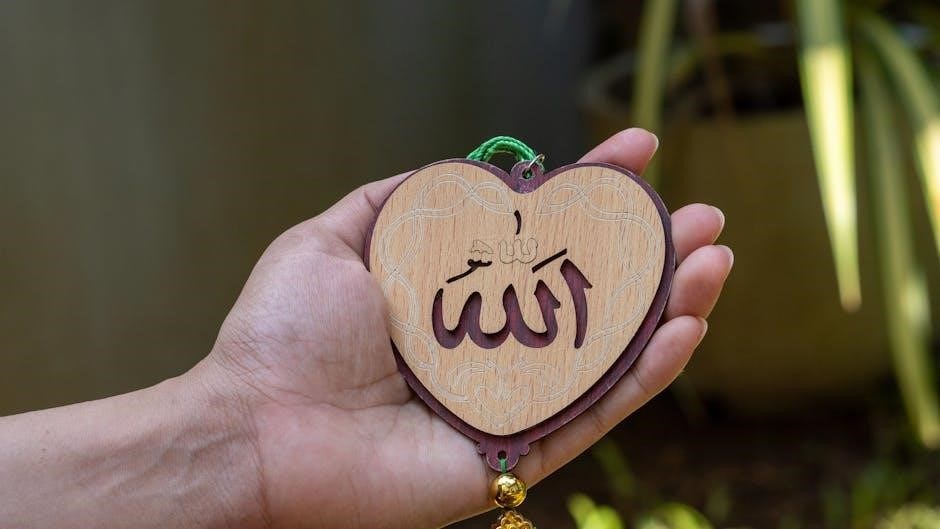
The 99 Names of Allah hold a prominent place in Islamic art, particularly through exquisite calligraphy․ Skilled artisans dedicate themselves to beautifully rendering these names, often incorporating them into intricate designs found in mosques, homes, and personal adornments․
These artistic representations aren’t merely decorative; they serve as constant reminders of Allah’s attributes and inspire contemplation․ Many PDF resources detailing the meanings of the names are used as references for artists, ensuring accuracy and reverence in their work․
The visual appeal of the names, combined with their profound spiritual significance, creates a powerful synergy․ PDF guides often showcase examples of traditional and contemporary calligraphy, fostering appreciation for this unique art form and deepening understanding of the divine attributes․
Recitation in Islamic Education
Recitation of the 99 Names of Allah (Asma ul Husna) is a cornerstone of Islamic education, particularly for children․ Memorization is encouraged as a means of instilling faith and fostering a close relationship with the Divine․ Many educational institutions utilize PDF materials containing the names, their transliteration, and meanings․
These PDF resources often include audio recitations, aiding in correct pronunciation and facilitating memorization․ The practice isn’t simply rote learning; it’s coupled with explanations of each name’s significance, promoting understanding and reflection․
Through this educational approach, students learn to appreciate the depth and beauty of Allah’s attributes, strengthening their spiritual foundation and preparing them for a life guided by Islamic principles, all supported by accessible PDF study guides․